Saturday, 11 September 2010

Old Seafarer, New Bike

This posting has no shipping content whatsoever.

Triumph Speed Triple 1

On Tuesday, I took delivery of a new Triumph Street Triple - in red! After 22 years riding BMW's I have foresworn Teutonic efficiency for English hooliganism, and it's great! The Street Triple is a naked sports bike based on the Triumph Daytona 675. The engine is Triumph's trademark triple and there is nothing on the bike which isn't essential to make it go or stop. No ABS, no heated hand grips, no anything except engine, wheels and brakes. Touring is out of the question, and pillions are tolerated begrudingly.

Triumph Speed Triple 3

Think of it as two wheel's answer to the sports car, and you have it.

Triumph Speed Triple 4

Life is good.

The Antipodean Mariner
12th September 2010

Sunday, 1 August 2010

The life and death of a greenfields Shipyard

This posting comes after a long layup from my blogging. No excuses for the lack of activity - will try harder...

Orient panorama

The post is on the short life of a Korean 'greenfields' shipyard. A greenfield is defined as a start-up shipyard, and while normally Chinese, there are several Korean yards which have suffered a similar fate post-GFC. Our interest in Orient Shipyard came about through the time-charter of two Capesize bulk carrier from their Head Owners which were in turn contracted and financed against the charter

Orient drydock

The plan was ambitious - to simultaneously build a shipyard and two Capesize bulk carriers at the peak of the dry bulk boom in 2008. The Yards' plan was to built a floating dock and the first Capesize on a land-based building pad. The dock would be launched and the five by 5,000 tonne ship sections of the Cape rolled on to the dock for joining. It was explained to me that the South Korean Gov't discourages the development of graving docks, and that floating dock launching is a well proven technology in the industry.

Photobucket

My company became concerned at the vague assurances from the Head Owners on delivery, and I was dispatched to Gwangyang to visit the Yard and sight progress on the vessels. The Yard itself was in a sorry state, with steel plate and sub-assemblies lying among mud and gravel on a partially-paved site. There were no covered workshops, and pre-cut and formed steel was being brought in from outside contractors for welding and assembly. A single keel block had been completed (which lead to a contractual stage payment) and sat forlornly in the middle of the Yard, festooned with tattered bunting from the keel laying ceremony six months earlier.

Orient Cape panorama

The delivery date duly came and passed with no prospect of delivery, legal notices were issued and the prospect of the first vessel being delivered into charter became more and more unlikely. The last inspection in April of this year revealed the first vessel well advanced in terms of the 5,000 tonne blocks and the floating dock launched. The Head Owners were desperate to delivery one of the two vessels contracted and were unwilling to see the charter (and their structured financing) collapse.

Orient bow

July 28th 2010, and Lloyds List reported that Orient Shipyard had filed for bankruptcy protection. The Busan Yard had succeeded in delivering Handysize bulkers, but the delays in the Capes from the Gwangyang hard had apparently brought the company down. I have not been able to find out whether the first Cape was successfully transferred on to the floating dock for assembly and float out. The wreckage of Orient Shipyard will no doubt be picked over for salvageable assets. Given the parlous state of the Capesize charter market it would seem that the last thing needed is two more speculatively financed 180,000 DWT bulk carriers.

Acknowledgement to Paul R. for additional photos of the near-completed super-blocks, April 2010.

The Antipodean Mariner
8th August 2010

Wednesday, 7 April 2010

Who knows what a Coal Tanker is?

From: XXX@msq.qld.gov.au [mailto:XXX@msq.qld.gov.au]
On Behalf Of msqmail@tmr.qld.gov.au
Sent: Wednesday, 7 April 2010 1:35 PM
To: The Antipodean Mariner
Cc: sicc@tmr.qld.gov.au

Subject: Re: What's a coal tanker please?

Dear Sir

Thank you for your email.

Thank you for pointing out this error and it will be fixed as soon as possible.

Regards

-------------------

Sent: 07/04/2010 11:40 AM
To: "msqmail@msq.qld.gov.au"
Subject: What's a coal tanker please?

Hi there

The media section of Maritime Safety Queensland's website lists the 'Shen Neng 1' as a coal tanker?

http://www.msq.qld.gov.au/About-us/Msq-headlines/Great-Barrier-Reef-grounding.aspx

"These images of the coal tanker Shen Neng 1, aground on a reef 70km east of Great Keppel Island, were taken by Maritime Safety Queensland on Sunday afternoon, 4 April 2010. The images are thumbnails - the full-size versions are available below each image. The full-size versions are large and may take some time to load, especially on slower Internet connections.


The 'Shen Neng 1' is a Bulk Carrier for shipping dry bulk cargoes like coal. Tankers carry liquids such as oil, petroleum products and chemicals.

I'm really surprised that the maritime safety authority such as MSQ "doesn't know its own product" - or did you just entrust this task to a journalist or some web developer?

Best regards

The Antipodean Mariner

PS Usual disclaimers apply - this email represents my own views as a Master Mariner and a profession seafarer who knows the difference between a bulk carrier and a tanker, and doesn't represent the opinion of my Employer.

Wednesday, 24 March 2010

From OBO to CABU - the evolution of a concept

In the 1970's (well - lets just say before the Oil Companies invented Vetting Inspectors) a ship design was developed which combined the bulk carrier and oil tanker - the OBO. The OBO was the Ship owners dream, able to carry oil on one voyage and then bulk on the backhaul. The fact that many of these vessels (and their crews) came to a premature end was due to hydrovcarbon gas-generated explosions on the bulk voyage. The 'Berge Istra' literally steamed to the bottom with almost all her crew after a double bottom explosion. The only survivors were two crewman painting on the foredeck and who witnessed (and survived) the spectre of their 227,000 DWT home disappearing beneath their feet.


As OBO's fell out of favour, it appeared that their brief summer would end on the scrapping beaches. Then in the early 1980's the concept was recreated but in a form of a smaller Panamax hull - the PROBO. The PROBO was developed with full width box-shaped which could carry containers, dry bulk and oil. The class had two gantry-mounted cranes for unitised cargo as well as handling the pontoon hatches. Nine of these vessels were built by Hyundai between 1985 and 1989, and continue to trade today.


Oil company vetting policies made alternate trading in dry and wet difficult, and so some of the vessels switched into caustic soda which didn't require Oil Major vetting approvals. Two-way trades developed lifting caustic soda from the Arabian Gulf or North Asia to Australia, and then alumina back. The dry bulk boom of the 2000's drove most of the PROBO's out of wet trading even though they were far from ideal with their box shaped holds.

With the PROBO fleet ageing but with an ongoing niche in the market, Norwegian owner Torvold Klaveness developed the CABU with Oshima Shipbuilding of Japan. The CABU (CAusic BUlk) took the best and most profitable characteristics of the PROBO. No container or unitised cargo capability, or cargo handling gear. The vessels are basically a 7 hold Panamax in which 3 holds (2, 4 and 6) are coated for caustic and equiped with FRAMO deepwell cargo pumps. In bulk carrier configuration, the CABU can load about 65,000 tonnes of heavy ore or coal or as a tanker about 60,000 tonnes of caustic.


So from a concept to miminise ballasting and maximise freight paying tonne-miles, the OBO has evolved from a a problem child into the relatively safe dry and caustic bulk carrier occupying a niche market for the alumina refining industry. With the new Combined Structural Rules (CSR), the CABU design will need to evolve further to incorporate a raised foc's'le head and heavier hatch scantlings. The CABU has given the OBO a new lease of life, but one which is a world away from to original oil and ore carriers on which they were based.

The Antipodean Mariner
24th March 2010

Friday, 29 January 2010

MoorMaster: Technology vs. Fear of Technology

My first posting for 2010 after a 2 month summer layoff.

I'll start by declaring that this is not a commercial plug or product placement. My company are setting up a trial berth for the MoorMaster vacuum mooring system. Here's a link to their website;

http://www.cavotec.com/ports-maritime/english/36/automated-mooring-systems/

Sanko Supreme,Weipa

Moormaster was designed by a New Zealander, Peter Montgomery, to try and advance the safe mooring of ships from Ancient Greek times.


Moormaster

In short, the vessel is secured alongside the wharf with high surface area vacuum pads. One of the early units was fitted to a ship and secured to pads on the wharf.

Moormaster have since been bought by Cavotec, an infrastructure equipment manufacturer, and the system has been exported to Australia, Oman and the UK. The system has had the strongest adoption in ferry ports and container terminal where the vessel are returning regulalry to the same berth. Port Hedland Port Authority have announced that the system will be fitted to a new common-user iron ore berth under construction.

While I have no doubt that the system can be engineered to operate in a dusty bulk terminal environment, my concern is with the soft human interface. There is no doubt that the system offers compelling advantages - safety of crew and linesmen while mooring, holding power in bad weather and for container terminals improved container exchange rates due to the ships being firmly held in position under the gantry cranes. Port and Terminal operators will save in labour costs by reducing mooring gangs from the current 8-10 persons to one system operator.

The human factor is going to be convincing the Master of a tramping bulk carrier (Handy to Capesize) that "its all going to be OK" and that he doesn't have to put out any mooring lines. The ISM Code has placed a duty of care on the Master, Managers and Owners to operate ships safely. Every shipboard safety management system contains procedures and work instructions on mooring the vessel in port. Use of the MoorMaster units without a risk assessment and procedural change request to the SMS will potentially put the Master and ship at risk of a PSC defect or detention.

EII Dampier

Cargo interests don't have a great track record for accepting responsibility for their actions. Alternate hold loading of bulk carriers, 16,000 tonne per hour iron ore loading rates, black-listing Masters and ships for petty infractions at the berth are legacies of commercial expedience over safety and seaworthiness.

Establishing Moormaster as a technology which enhances safety and reduces port costs will require Terminal Operators to guarantee the system's performance to the Master and PSC Inspectors. Without this guarantee, Masters will (rightly) refer to their SMS, moor their vessels and Terminal Operators will be left wondering why they have millions of dollars of capital (excuse the pun) 'tied up' in idle MoorMaster units.


Comments, solutions, suggestions all gratefully received and considered as we roll out these units for trial at our bulk fuels terminal.

The Antipodean Mariner
29th January 2010

Tuesday, 24 November 2009

Yangtze River: moving iron ore on China's river highway

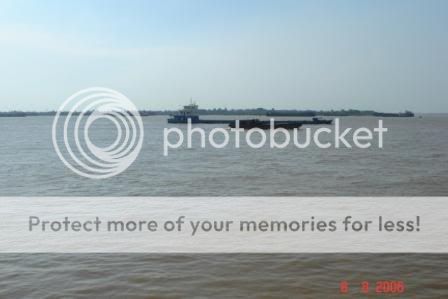
In 2006, my first 'real' project was to do a study on iron ore transport on the Yangtze River. The name Yangtze is actually a Western creation - the correct name for the river is the Chang Jiang. However, Yangtze is is for this posting.


The Yangtze is China's main freight highway, and is navigable by commercial ships into the central Chinese cities of Wuhan and Chongqing. After the devastation of WWII and Communist Revolution, China had taken a conscious decision to distribute and decentralise its steel industry in the interests of national defence. Steel mills were set up along the Yangtze River, which in turn drove a river-borne trade of iron ore and coking coal.


When China began its economic 'growth spurt' in the 2000's, the River and the transport networks experienced uneven development. The lower reaches of the River are navigable some 274 miles to Nanjing in up to Panamax (70,000 DWT) bulk carriers. Navigation past this point is impossible due to a major rail bridge at Nanjing, and upriver trade continues with low air draft barges and river vessels.


The first river berths expanded to take Panamax and then Capesize were the steel mills in the lower Yangtze at Haili, Nantong, Boashan and Luojing. The River forms a natural bar at its entrance, which requires continuous dredging to maintain a navigable channel. With the growth in iron ore imports, the coastal deep water ports of Ningbo (Beilun), Majishan and Rizhao became storage hubs. Large ore carriers discharged their full cargo at the coastal ports, which was then transhipped on river vessels for delivery to mills on the Yangtze.


Once past the River entrance at Chang Jiang Kou, the River is deep - typically 17m to 21m of self scouring, fresh water channel. In 2006, new ore terminals were being built for Capesize (170,000 DWT) bulk carriers at Dagang Port (170 miles) and ore cranes being raised to handle Capesize airdraft at Jiangyin Port (130 miles). The only major impediments to navigation in the upper reaches is a high tension power cable spanning the River at Dagang and aquaculture in the more open northern river channel above Dagang Port.

At Nanjing there is a major iron and steel works on a branch channel to the north of the city. Here, small Chinese river/coasters operated on a continuous ore shuttle from the ocean ports.


Steam locomotives patiently hauled ladles of molten iron from the blast furnaces around to other parts of the mill for further processed.


After two weeks on the road and small provincial port towns , getting back to the big city buzz of Shanghai was strangely familiar and comfortable. The project proved in concept that bulk ore carriers could be part-discharged at the ocean ports and then proceed upriver to compete at the steel mills as far upriver as Zhangjiagang, Jiangyin and Dagang in Jiangsu Province.

The Antipodean Mariner

Sunday, 25 October 2009

2009 MotoGP: biking Down Under

This posting has almost no shipping content!

Last Saturday 18th October was the 2009 Australian MotoGP at Phillip Island. Last year I missed the race, arriving in at London Heathrow just as the race finished and Casey Stoner was on the podium. This year and with better planning I was able to schedule travel commitments around the weekend and get away on the bike.


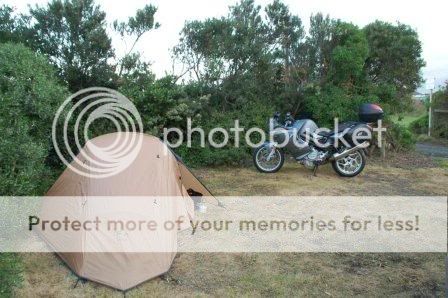
One of my regular riding buddies, Mick, is a Lloyds Surveyor and also had to juggle surveys around the weekend. The plan was to ride down to Kilcunda together, a little seaside hamlet just off Phillip Island, and camp on the beachfront Saturday night before the MotoGP on Sunday. Bad news was that Mick's bike cooked its electrics at the service station before he'd even left Melbourne. Good news was that I hooked up with a bunch of super-well prepared guys at Kilcunda with a barbecue, wine and gourmet chef who rides a 'Hyabusa.


Mick got his bike sorted, and rode down to Kilcunda Sunday morning. We caught the MotoGP Class final practice on a cold but dry track as the riders completed their final setting-up for the race at 16:00.


On the day, there were 50,000 at the track - down on previous years due to the lousy weather. However, less competition for prime positions meant that we were able to get around and see more of the track. In addition to the usual latest new bike offerings in the Exhibition Hall, there was one of Rossi's Fiat Yamaha 800's - cool.


The atmosphere during the race was fantastic - Casey Stoner from start to finish. After he'd completed his victory lap with the Australian flag, we got to walk the rack back to the presentation podium.


Mick and I joined the thousands streaming off the Island for the ride back to Melbourne, and the amazing feeling of comraderie as 30,000 bikes formed a solid 'school' of bikes up the highway.

The Antipodean Mariner
25th October 2009