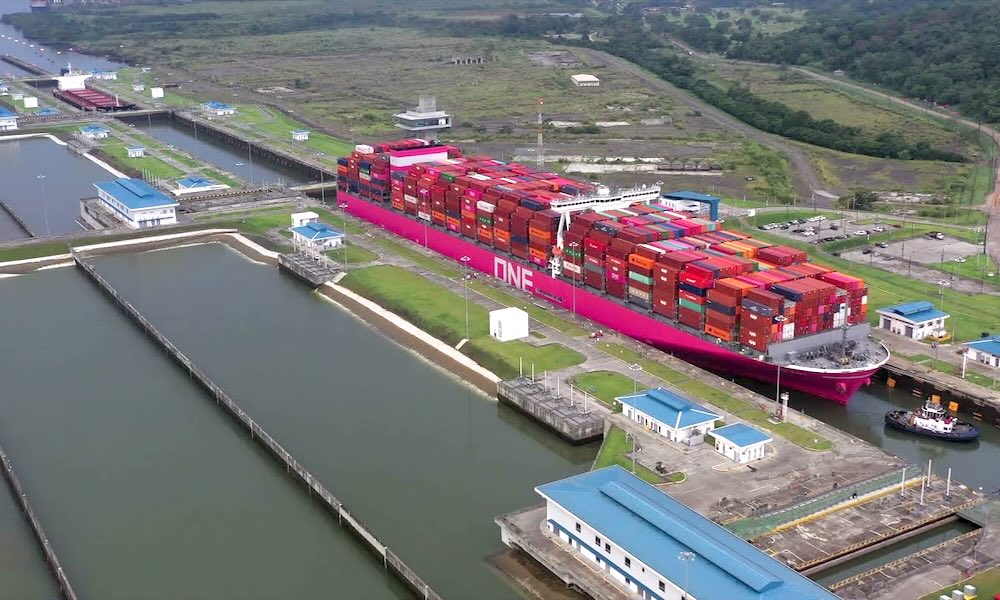
Wednesday, 16 November 2011

Rena salvage - ST-60 incident

With the increase in activity at the site, as the salvage operation moves from oil recovery to discharge of the Rena’s containers, the Antipodean Mariner has cultivated new sources. Blogging will continue of the activities at Astrolabe Reef from the decks of the various craft now clustered around the inert hulk.

There was an incident on the barge ST-60 yesterday which made the media through more traditional sources. A personnel transfer basket (known on the salvage industry as a Billy Pugh) with three salvors aboard had to be dumped into the ocean after it developed an uncontrollable swing in the low swell.

The tops of the crane jibs are estimated to be moving in an arc of up to three metres in the gentle swells off Astrolabe Reef. The cranes temporarily fitted to the ST-60 are designed for a direct vertical static lift from a stable land-based platform and not the dynamic motion experienced on the barge.

Although their load rating may have been reduced, one observed fears that they will not cope with the task. The crane’s hook (or a forty foot container) developing an uncontrollable pendulum swing and striking the fragile latticework of the crane jib will have catastrophic consequences.

The crane barge ‘Smit Borneo’, which is on the way to Tauranga from Singapore, is purpose built for heavy lifting in a seaway and looks infinitely better equipped to handle the conditions. Hopefully, ST-60 can continue to support the salvage operation by receiving and shuttling the containers in to the Port of Tauranga.

This posting is not to taken as a criticism of the salvage operation but a reminder of the dangers faced every day by the Salvors using the resources they have in a dynamic environment.

The Antipodean Mariner
16th November 2011

Rena General Average

When Rena grounded on Astrolabe Reef in the early hours of 5th October, a complex legal process was set into motion which will likely last a decade or more. All around the world, lawyers, insurers, salvors and surveyors will have reached for an A4 lever arch file and written ‘Rena File No.1” on the spine. Many hundreds more A4 files will be filled in the months and years to come.

One of the truly ancient principles which will likely be applied to the Rena’s salvage is General Average. General Average is another maritime peculiarity dating back to early Greek times. Even now, every voyage by a cargo ship is termed a ‘maritime adventure’ to which the ship’s Owner, Cargo owners, Master and Crew are deemed participants.

When heavily laden sailing craft were plying the Mediterranean, storms and running aground were an accepted peril of the maritime adventure. In the teeth of a storm, it was common practice for the Captains to jettison part of the cargo thereby lightening the vessel so as to make it safely to port (less a few amphora of wine). When choosing which cargo to jettison, Captains and crews were often not too picky - self-preservation ruled.

Provided the vessel made it to port, the hapless cargo’s owner would be informed of the loss of their precious goods. One party had borne the loss of their goods in order to ensure the successful delivery of the other cargo and the preservation of the ship. The Greeks put their mind to this inequity of one party suffering loss for the collective benefit of the other participants to the maritime adventure.

The principle debated, and now enshrined in maritime commerce, was that the losses of one should be compensated by the collective beneficiaries of the successful voyage. There are a few rules though to maintain fair play in the unscrupulous, rough-and-tumble of shipping.

A General Average claim must, among other things, be voluntary, timely, reasonable and successful. When the Owners of the Rena were alerted to the vessel’s grounding, one of the first thoughts would have been ‘Can we declare General Average?’

After all, if their actions successfully save the majority of the containers but result in the loss of their ship on Astrolabe Reef, then aren’t they entitled to be compensated under the principles of General Average? A powerful incentive when you consider the combined value of the ship and 1,300 containers at the time of the grounding.


Crane Barge Smit Borneo under tow to the Rena salvage site from Singapore:
Kees Drent, Shipping News Clippings 13/11/11

If General Average is declared, every container successfully unloaded to the barge ST-60 will strengthen the Rena’s Owners case that their actions met the test of being voluntary, timely, reasonable and successful. Just imagine you are passenger in a taxi which T-bones another car and the taxi driver demands you contribute to the repair bill! General Average in a nutshell.

Interesting if the ‘cut and thrust’ of maritime commerce, law and salvage lights your fire. No mention yet of a dolphin, penguin or cormorant in this Blog, which I will leave to my reader from the Ministry of the Environment (you know who you are).

The Antipodean Mariner
15th November 2011

Sunday, 13 November 2011

RENA salvage and Convention Liability

Thanks again to the readers who have commented since the 'NZ Herald' picked up on the story;

http://www.nzherald.co.nz/rena-oil-spill/news/article.cfm?c_id=1503203&objectid=10765493

Time now to 'heave to and weather the storm'. One of the burning questions being debated in New Zealand is why is the nation going to have to pick up a large proportion the cost of the clean up? The ship is owned by a substantive Shipowner, Costamare, who have issued a statement apologising for the accident and the Authorities are not having to trawl through a web of Liberian and Panamanian shelf companies to identify the beneficial Owner. The answer lies in commercial principles on which merchant shipping has operated since the Greek and Roman times.

The two basic principles in play are the mutual insurance of maritime catastrophes and limitation of liability. Starting with mutual insurance, the 'Rena' is insured with the Swedish Club. How, you may ask, can a Club be an insurance company? The name Club indicates that the insurer is a Protection and Indemnity Club - or P&I Club for short. P&I Clubs are not-for-profits and have existed for centuries because of the inherently risky nature of shipping. Members of the Club collectively self-insure the 'uninsurable' risks of their combined fleets. Every Shipowner who is a member of the Swedish Club will be contributing to, and has collective liability for, the cost of the Rena's salvage and oil spill clean-up.

So with this open-ended liability now resting with the Swedish P&I Club, how do they avoid the hypothetical catastrophe of one of their mutually insured ships colliding with the 'Queen Mary' and then both vessels sinking in the middle of New York Harbour? Every member of the Club would face financial ruin. This is where the second principle kicks in - liability is limited in proportion to the size and earnings capability of the ship.

It's a bit like Finland's legal system where your speeding fine is a calculated by how much you earn - an expensive exercise for the CEO of Nokia who was fined 116,000 Euro for riding his Harley Davidson 25km over the speed limit in 2002.

Rena's liability is limited, based on her Gross Tonnage. The term has been 'metricated' as the original term was a Tun, or a wine barrel. A ships tunnage was a measurement of how many
barrels could be fitted in the cargo holds and as a proxy for how much money the Owner could earn from her on a voyage. Gross Tonnage is used in all aspects of commercial shipping to calculate fees, charges, levies and taxes. 'Rena' will have paid a tonnage-based oil pollution levy to Maritime NZ (also known as conservancy dues) on arriving in New Zealand on her final, fateful voyage. This is ratified by the Governments of maritime nations through the concisely named 'International Convention on Civil Liability for Oil Pollution Damage', or CLC Convention for short.

Put together, 'Rena' carries insurance which is capped by her ability to earn money (freight) for her Owner. The Swedish Club will pay for the clean-up up to the limits of the CLC Convention.

This summary is simplified to explain the principles on which maritime commerce operates. The Swedish Club has confirmed that up to US$1.4 Billion is available for oil pollution clean-up. There is still the legal bun-fight ahead about salvage, wreck removal and cargo (so eloquently described by our man on Astrolabe Reef).

Next positing, I'll try to explain the principle of General Average.

The Antipodean Mariner
13th November 2011

Friday, 11 November 2011

Make Rena wreck a reef

Courtesy of Tradewinds' (11/11/2011):-

With an end to the oil pollution threat from the wrecked Costamare containership Rena in sight the question of what to do with what remains of the ship is becoming an issue in New Zealand.
The authorities have issued a wreck removal notice requiring the shipowner to dispose of the 3,032-teu Rena (built 1990) which will potentially produce a very costly claim for the Swedish Club which has both the hull and the protection and indemnity cover on the vessel.
The bunker removal operation underway at the Astrolabe Reef.But a full scale wreck removal may not be required. The idea of moving the wreck off the Bay of Plenty’s Astrolabe Reef and sinking all or part of the ship in deeper water is being mooted in New Zealand.


A divers' association believes the sunken wreck could become an underwater attraction with other voices suggesting an artificial reef would boost the maritime environment and sea life.
If the Rena became a reef it would be good news for the Swedish Club and for the claims record of Costamare.

But the owner and the club are also facing a threat from a campaign so far backed by 5,000 New Zealanders to make Costamare and its insurer pick up the entire bill for the Rena casualty, clean-up and salvage – a bill that might run to as much as $100m.

New Zealanders are also learning about maritime limitation and the 1976 Convention on Limitation of Liability for Maritime Claims (LLMC) which appears relevant to the Rena loss.
For the Rena, a ship of 38,000 gross tons, the LLMC limitation amount is about SDR 6m ($9.5m) or NZD 12m with lawyers suggesting that it would be hard under New Zealand law to break limitation.

It looks as if the limitation issue may become a political hot potato with Costamare and the Swedish Club under pressure to go a good way beyond payment of the minimum amount.
There is also discussion of the possibility of a criminal prosecution over the grounding of Rena.
So there is both good and bad news for Costamare and the Swedish Club, but maybe also an environment where there could be room for deals over the LLMC limit, wreck removal and a prosecution.

Meanwhile Maritime New Zealand says good progress is being made in removing the bunkers of the Rena although there are hundreds of tonnes of oil to remove. The flow rate of the pump over to a tank barge is only three or four tones an hour with weather and sea conditions having the potential to delay operations.

Source: Jim Mulrenan, Tradewinds Singapore
http://www.tradewindsnews.com/casualties/646824/make-rena-wreck-a-reef-plea?lots=site

Rena salvage - gagged!

The Antipodean Mariner's man on the spot has unfortunately been 'gagged', though at this point still with his job on 'GO Canopus'. This will be his final report from Astrolabe Reef, though I will continue to post updates of progress on the salvage gleaned from the public domain.

Hello all,
As per my last report, I have given an undertaking to transmit no further live updates of the salvage operation at Astrolabe Reef. My literary days have been curtailed, although for posterity, I will continue to keep an electronic log of my daily observations.


Thank you all for your kind comments and supportive emails.

I may use them in an endeavour to show appropriate personnel that mariners and New Zealanders from all walks of life, anywhere in the world, are genuinely interested in the salvage operation and want it to succeed without further incident. And that they appreciate on the spot, "real life" updates, rather than minimalist, sanitised sound bite versions put forward by the mainstream media.

Of course, I will have to curtail my opinions and stick purely to descriptive observations.
Au revoir and safe sailing everyone.


Signing off from Astrolabe reef for the last time.

If you enjoyed the last week's posts, feel free to comment as he's able to read the blog from 'GO Canopus'.

K - thanks from me for an entertaining three weeks of daily updates from this once in a lifetime opportunity.

Thursday, 10 November 2011

RENA salvage - Storm threatens!

A storm is brewing off Astrolabe Reef despite ongoing good weather for the Salvors. The Antipodean Mariner's man on the scene has fallen afoul of the non-disclosure clause in his employment contract, and the objections of the one of the Regulatory Agencies to his "call it as I see it" gonzo journalism style. The latest update has been editied to avoid offence (real or perceived) to those in the un-named Agency.

Hello all,
Welcome to my new readers in Russia, the Channel Islands and the [deleted regulatory agency] .


It was another lovely day out here at Astrolabe reef. The WSW wind continued to blow the sheen well out to sea. The weather gods certainly have been good to the salvors as of late. Long may it continue.


I think I witnessed Darwinism first hand today. As per earlier reports, there are multiple schools of fish shoaling around the reef. Sea birds are now also returning to the scene, making the most of the rich pickings. Proof that nature abhors a vacuum of course, but more notable was that both fish and birds were upwind and up weather of the Rena and the sheen.

Could it be that the smart birds know to keep away from the oil and the dumb ones die?
There was sheen in the water in the vicinty of where the maggots wash overboard, yet neither fish nor bird were there. Of course it could it be something much simpler, like current & weather, or noise from our thrusters? Whatever the reason, it was certainly very noticeable.

I have this evening been reminded of a non disclosure clause in my employment contract, which will preclude me from sending any further updates from the salvage site. I will endeavour to reach a compromise which will allow me to continue, as I know for many of you, this is the only news you get on the subject. However, if not, this may well be my 2nd last report.

Signing off from Astrolabe reef.

Wednesday, 9 November 2011

RENA Salvage - 8th November log

It was another beautiful morning here at Astrolabe reef. The waxing, near full moon, set over the bow of the Rena, followed by a lovely sunrise just south of White Island; which we can see on a clear morning, still smouldering in the distance. What small oil sheen there was visible, continued to be blown to the East, well out to sea.

For the previous 24 hours, we have remained in close quarters on the port side of the Rena, with our oil transfer hose still connected to her bunkering manifold. Our DP system is operating very well, although we do lose DGPS diff signals occassionally, as the satellites disappear behind the accomodation block of the Rena. Our Cyscan laser range finder works very well at this close range and shows our reflector target mounted on the stern of the Rena, to be 44 metres away.

We now have a total of 22,000 litres of lubricating oil on board, stored in 2 of our ISO tank containers. It is slightly emulsified, due to contamination with both sea water and diesel, so is not reusable in its current state. It may be able to be rerefined or somehow recycled, but that is beyond my scope of knowledge. It is not continuous pumping to us, rather small parcel discharges, as the salvors drain all of the smaller lube & hydraulic oil storage tanks from within the engine room. There are occassions here when we feel like mushrooms, but generally we are kept pretty well in the operational loop.

Discharge of HFO & lube oil to the Awanuia has remained at a trickle. It will probably remain so, until completion of the hot tapping arrangements to the remaining fuel tank on the starboard side. Spare a thought for the personnel on the Awanuia. They are moored 30 metres down wind of the stern of the Rena. Every moment on deck they would be exposed to the stench emanating from the rotting contents of the freezer containers. I would assume that their air condition system is set to recycle.

There has been a slight but significant change, in the status of the major crack on the port side of the hull of the Rena, in the vicinity of number 2 hold. It is probably not noticeable to the casual observer, but there is further compression buckling of the hull apparent at the water line at low tide, coupled with a visual, transverse and vertical sheer misalignment of the forward and aft sections of the hull. Likewise the compression buckling in the hull, apparent in the vicinity of number 1 hold is also becoming greater. To clarify, when the Rena settled in her present position, her heading was 278 degrees. Her forward section remains on that heading, whereas her aft section might now be heading 279 degrees. Close observation of an aerial photo might reveal the aft section to be slightly offset to the South. To the non mariners, think of her as slightly bent to the left, like a banana. It appears that the incessant harmonic motions of wind, tide, tidal stream (tide induced current), waves and swell, appear to have finally severed the spine of the Rena. The Dutch salvage rep on board (the proud owner of my $20), confirmed that there is now a 60 cm movement in all directions, between the forward and aft sections.

The weather is due to turn to the South East at 25 knots on Thursday evening. It is the first time it has come from that direction in the 2 1/2 weeks we have been here on location. It will be interesting to observe the outcome. The Southeasterly weather would be just off our starboard bow, and put us on the "weather side" of the Rena, in a "blow on" position. Meaning, if we had an engine failure, we would be blown on to the Rena. She is more benign than a live gas riser, but it would still ruin our day. I expect that the call will be made within the next 24 hours, whether we remain connected to the discharge hose, or suspend operations and stand off. It is the Captain's ultimate decision, whether to stay in position, or stand off at a safe distance. I suspect that we will disconnect the hose by Thursday afternoon.

There was a new player in field today, in the form of a Sea-Tow tug and barge.


ST-60 (courtesy of 'Gladstone Observer')

The barge had two, long jib crawler cranes on board. They stooged around for a couple of hours, raising and lowering their fragile looking latticework jibs, looking all the while like long necked herons going through a mating ritual before proceeding back into port.


That is all from Astrolabe Reef today